
Tomorrow is the start of the National Invasive Species Awareness Week! What is an invasive species? An invasive species is a non-native organism who’s introduction to an environment is likely or does cause either environmental or economic harm or harm to humans. The definition shows that invasive species are a problem not just for environmentalist but for businesses and every day people.

Invasive species come in a variety of shapes and sizes. The Burmese Python (Python bivittatus) is a very large snake (reaching 16 feet long) that has been introduced to Florida. Its size allows it to eat any native species there, including alligators. On the flip side, the Emerald Ash Borer (Agrilus planipennis) is a small bug native to Asia. Unfortunately, they were introduced to North America and Europe. These bugs lay their eggs in ash trees. Once the eggs hatch, the larva start to eat the tree causing it to die. This can cause serious economical and environmental damage.
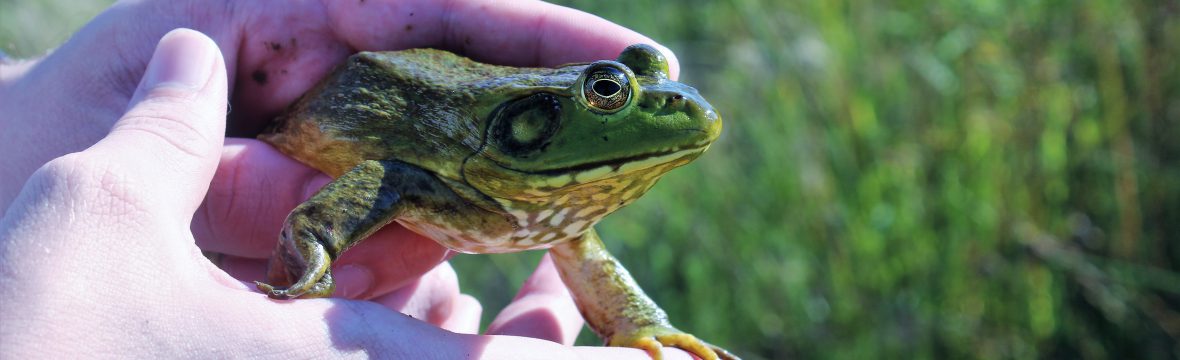
Amphibians aren’t special and can be invasive species as well. The American Bullfrog (Rana catesbeiana) has traveled around the world to quench people’s thirst for frog legs. These large frogs escape from frog farms and start causing problems for native species. The African Clawed Frog (Xenopus laevis) was once used as pregnancy tests and are a common pet. Unfortunately, the frog is a carrier for Chytrid Fungus, a deadly disease, that is wiping out frog species around the globe. Released pets and escapees are spreading the disease even more.

This National Invasive Species Awareness Week, I will be highlighting invasive frogs, other invasive reptiles and amphibians, and other invasive species causing problems for amphibians and reptiles. Follow along on the blog, twitter, bluesky, or facebook!