

Common Name: Upland Chorus Frog and Southeastern Chorus Frog
Scientific Name: Pseudacris feriarum
Family: Hylidae – Tree Frog family
Locations: United States – Alabama, Arkansas, Florida, Georgia, Illinois, Kentucky, Maryland, Mississippi, Missouri, North Carolina, Pennsylvania, South Carolina, Tennessee, Virginia, and West Virginia
Size: 0.75 – 1.5 in. (1.9 – 3.8 cm)
While the Upland Chorus Frog is part of the Tree Frog family, it doesn’t actually live in trees at all. Most of its time is spend on the forest floor. The breeding season of the frog varies depending on the latitude of where they are. More southern populations start their breeding season at the start of winter, while northern populations start at the start of spring. This time is the best time to spot a Chorus Frog because they can be really hard to find. They prefer mating in shallow, temporary bodies of water, where the female lays up to 1000 eggs. The eggs take a few days to hatch while they complete their metamorphism in two months.
The taxonomy of the Upland Chorus Frog can be confusing. It used to be considered a subspecies of the Western Chorus Frog (Pseudacris triseriata) before it became its own species. Now, it is considered part of the Nigrita clade with the Southern Chorus Frog (Pseudacris nigrita), Western Chorus Frog (Pseudacris triseriata), New Jersey Chorus Frog (Pseudacris kalmi), Spotted Chorus Frog (Pseudacris clarkii), and the Boreal Chorus Frog (Pseudacris maculata).

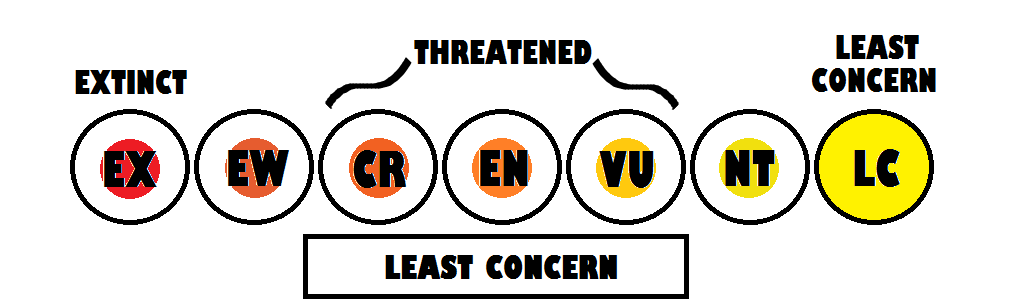
The International Union for the Conservation of Nature (IUCN) Red List assesses the Upland Chorus Frog as Least Concern for Extinction. They have a good size range and are common throughout their range.
8 thoughts on “Upland Chorus Frog (Pseudacris feriarum)”