

Common Name: Cuban Tree Frog
Scientific Name: Osteopilus septentrionalis
Family: Hylidae – Tree Frog Family
Locations: Bahamas, Cayman Islands, and Cuba
Introduced Locations: Anguilla, Costa Rica, Guadeloupe, Puerto Rico, Turks and Caicos Islands, United States (Florida, Hawaii, Louisiana, Georgia, Alabama, Mississippi, and Texas), British Virgin Islands, and US Virgin Islands.
Size: 3 to 5.5 inches (76.2 – 139.7 mm)
The Cuban Tree Frog is a large tree frog native to the Caribbean, but they have been introduced to other areas of the world such as Florida. They range in color from white to gray to brown. They sometimes have stripes or blotches but have more warty skin than other frogs.
They are the largest tree frog found in the United States. In Florida, the Cuban Tree Frog has become a problem. Their large size allows them to eat other smaller frogs and other native animals. They also can produce skin secretions that can irritate humans.
Cuban Tree Frogs are incredible breeders. They can breed year round but usually between May to October following warm rains. The frogs breed in any shallow, fish-less body of water. The females of the species can lay between 100 to 1000 eggs at a time. It only takes the tadpoles 3 to 8 weeks to complete their metamorphosis. This allows them to easily take over new areas.

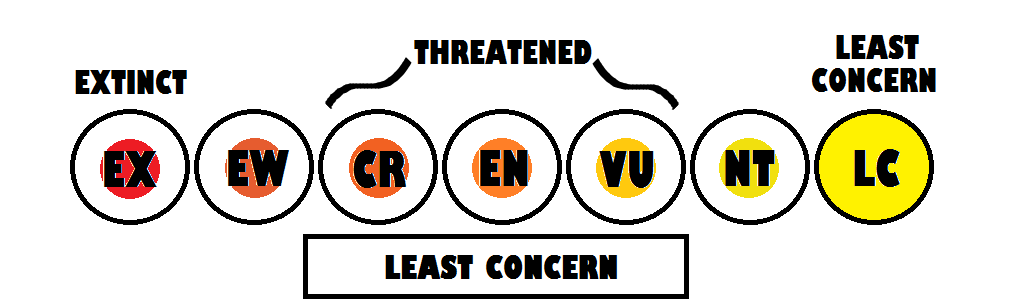
The International Union for the Conservation of Nature (IUCN) Red List assesses the Cuban Tree Frog as Least Concern for Extinction. They have a decent size range that they are expanding that they are common throughout it.
6 thoughts on “Cuban Tree Frog (Osteopilus septentrionalis)”