

Common Name: Mexican Burrowing Toad
Scientific Name: Rhinophrynus dorsalis
Family: Rhinophrynidae
Country Location: Belize, Costa Rica, El Salvador, Guatemala, Honduras, Mexico, Nicaragua, and the United States
United States Locations: Texas
Size: 3 – 3.3 inches (75-85 mm)
The Mexico Burrowing Toad is the most evolutionary distinct species of frogs, with over a 190 million years of independent evolution. It is believed that the fruit bat, polar bear, killer whale, kangaroo and human are more evolutionary similar than the Mexican Burrowing Toad to any other frog. It is the only living species in the family Rhinophyrnidae, while the rest of them died out millions of years ago.

As their name says, they are burrowing toads that live underground during the dry season. They have several adaptations to their underground life. They have strong hind legs with tubercles to help them with digging. Their weird nose helps them eating termites and ants, their primary food sources.
During the wet season, the toad emerges from their burrows to breed. The male toads call in temporary pools of water created by the rains, trying to attract mates. The female toads are larger than the males. Once the female toad selects their mate, the male toad embraces her and grasps her around the waist (inguinal amplexus). Then, the female toad lays her eggs and the male toad fertilizes them. The female toad only lays between 6 – 12 eggs. Afterwards, they leave the water body, letting their offspring fend for themselves. The eggs don’t take long to hatch and the tadpoles complete their metamorphism in one to three months.
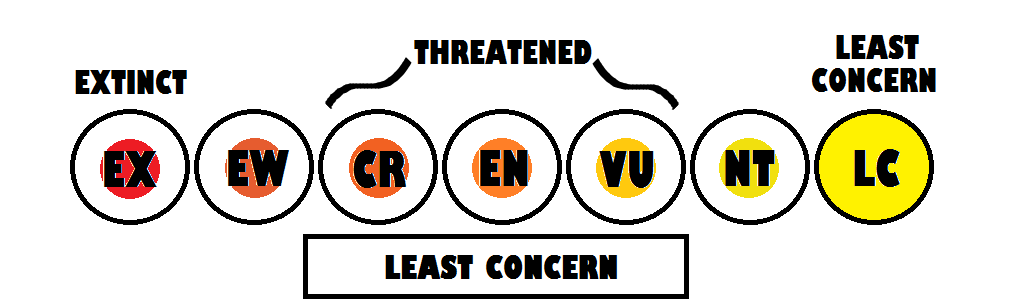
The International Union for the Conservation of Nature (IUCN) Red List categorizes the Mexican Burrowing Toad as Least Concern for Extinction. While the toad is rare in Texas, they are common throughout Central America.
4 thoughts on “Mexican Burrowing Toad (Rhinophrynus dorsalis)”