

Common Name: Ensatina
Scientific Name: Ensatina eschscholtzii
Family: Plethodontidae – Lungless Salamander Family
Location: United States, Canada, and Mexico
US Location: California, Oregon, and Washington
Size: 5 inches (145 mm) total length
The Ensatina Salamander is a complex of usually 7 different subspecies of salamanders found along the western coast of North America. They are referred to as a ring species or Rassenkreis, which is a series of connected populations that can interbreed with the close populations but can’t with the farther out populations.
The seven subspecies are..
- Yellow-blotched Ensatina (E. e. croceater )
- Monterey Ensatina (E. e. eschscholtzii)
- Large-blotched Ensatina (E. e. klauberi)
- Oregon Ensatina (E. e. oregonensis)
- Painted Ensatina (E. e. picta)
- Sierra Nevada Ensatina (E. e. platensis)
- Yellow-eyed Ensatina (E. e. xanthoptica)
Below is a map of the ranges of the subspecies.

Source: (2011). “Asymmetric reproductive isolation between terminal forms of the salamander ring species Ensatina eschscholtzii revealed by fine-scale genetic analysis of a hybrid zone”. BMC Evolutionary Biology 11 (1): 245.
The Ensatinas are terrestrial salamanders that are direct developing meaning their eggs hatch into small salamanders instead of tadpoles. Female salamanders usually lay around 10 to 15 eggs at a time on the ground. Breeding season in fall and spring but also happens during the winter too.

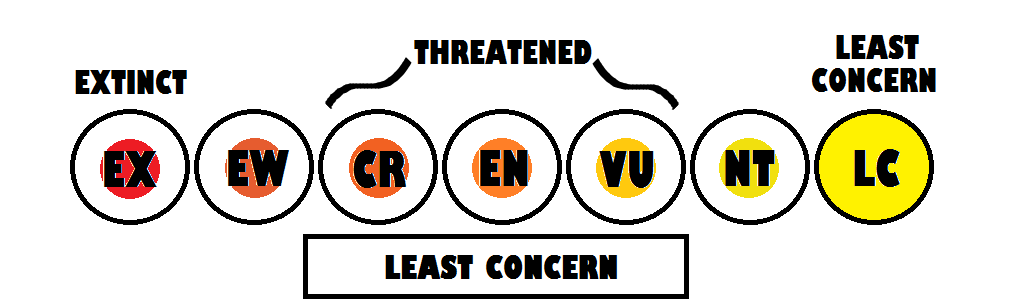
The International Union of the Conservation of Nature (IUCN) Red List assesses the Ensatina as Least Concern with Extinction. The salamander has a good size range and are common throughout it.
3 thoughts on “Ensatina (Ensatina eschscholtzii)”