

Common Name: African Clawed Frog or the Common Plantanna
Scientific Name: Xenopus laevis
Family: Pipidae – Tonguess Frog Family
Native Locations: Angola, Botswana, Cameroon, Congo, the Democratic Republic of the Congo, Estonia, Gabon, Kenya, Lesotho, Malawi, Mozambique, Namibia, Nigeria, South Africa, Swaziland, Tanzania, Zambia, and Zimbabwe.
Introduced Locations: Chile, France, Indonesia, Italy, Mexico, Portugal, United Kingdom, United States.
US Introduced Locations: Arizona, California, Florida, and Texas
Size: Up to 5 inches (12.7 cm)
African Clawed frogs are a common frog in the pet trade because they are relatively easy to take care of. I owned two of them myself. Their names are Sven and Olaf. They are fully aquatic frogs, only coming to the surface to take a breath of air. The African Clawed Frogs are very resilient frogs. If there is a drought and their water starts to dry up, they can burrow down into the mud. They can then a year there without food.
They are often confused with African Dwarf Frogs, but there are some key differences. The African Clawed Frog’s front fingers aren’t webbed, they have eyes positioned on top of their head, and they have curved, flat snouts compared to the Dwarf Frogs.
They are part of the family Pipidae, which are the tongueless frogs since they lack tongues. The frogs stuff food into their face with their hands like humans. They also lack vocal cords and make clicking sounds underwater to attract mates.

African clawed frogs are considered an invasive species because they are predators and can easily adapt to new environments. While naturally found in Africa, they have been found in the wild in Europe, North America, South America, and Asia. To help stop the spread of them, they have been banned as pets in many states in the US. The African Clawed Frog might also be a carrier of Chytrid Fungus, a deadly frog killing pathogen, and could be spreading it.
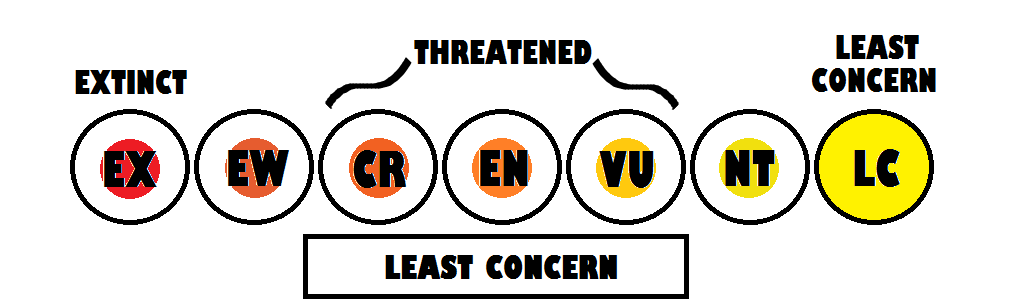
The International Union for the Conservation of Nature (IUCN) Red List assesses the African Clawed Frog as Least Concern for Extinction. They have a wide range and are common throughout it.
7 thoughts on “African Clawed Frog (Xenopus laevis)”